Braille Mission Mission About Us Directors Contact
Whats New
CSLF Logo
California State Library Foundation
About CSLF
Acquisitions
Memberships
publications
California State Library Foundation


Current Bulletin

Section I: Californiana

Section II: Library Related

Section III: Literacy

Section IV: Books & Printing

Section V: Huell Howser’s California’s Gold

Order Form


To purchase prints and posters,
visit our friends at Zazzle.com


The Triumph of Helios: Photographic Treasures of the California State Library

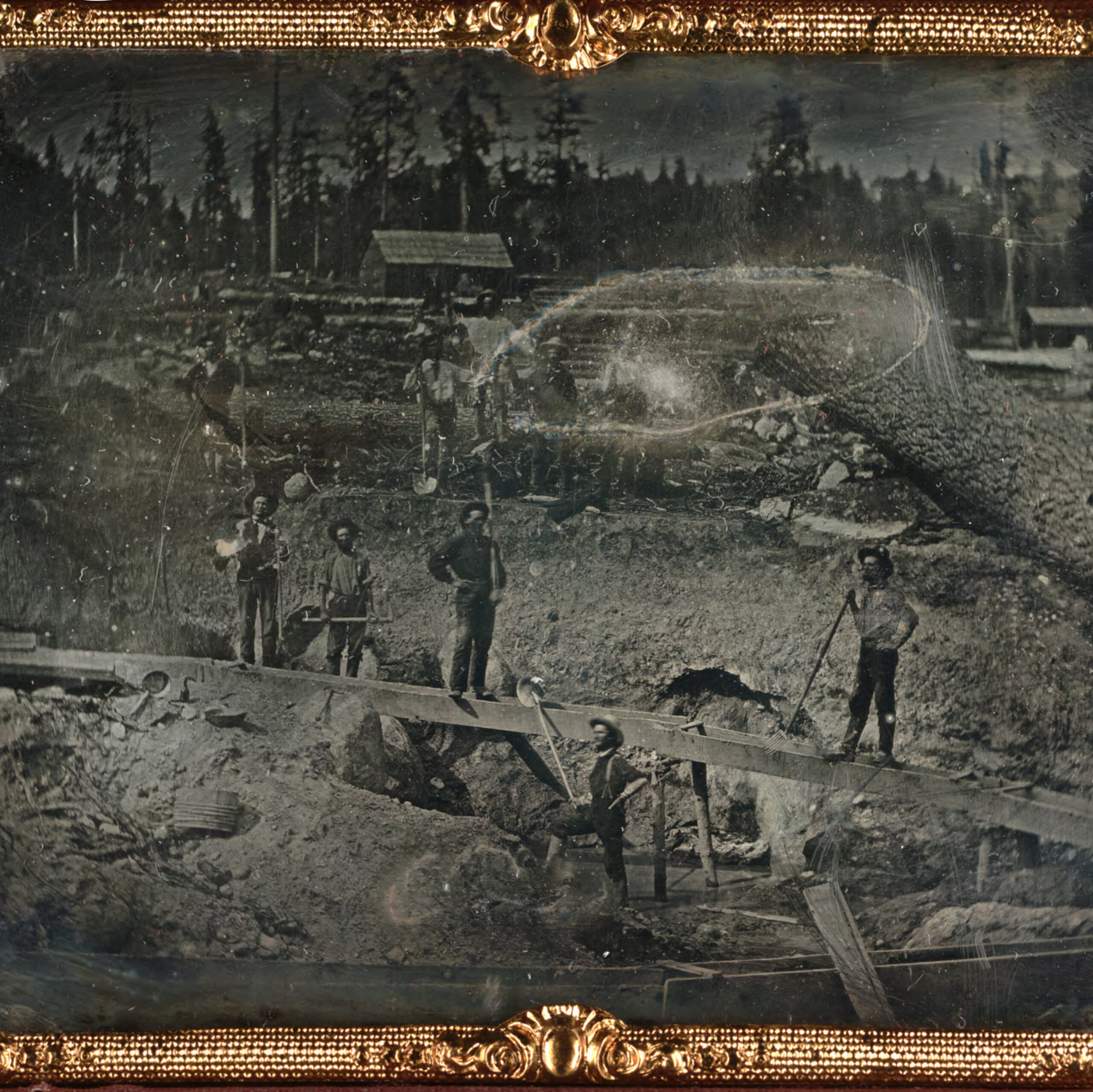
The Foundation is pleased to make available a beautiful catalog created for a special exhibition held in the University Library Gallery of Sacramento State University. Beautifully designed by Angela Tannehill, the catalog includes descriptions of representative examples of a wide variety of early photographic technology including daguerreotypes, ambrotypes, tintypes, mammoth plate landscape views, stereographs, glass positives, orotones, and books and ephemera illustrated with original photographs. Works by such masters as C. E. Watkins and Eadweard Muybridge are featured. Curator of Special Collections Gary F. Kurutz wrote the introduction and catalog descriptions; Professor Roger Vail of Sacramento State University supplied a foreword; and Heather Mosqueda of the university provided short biographies of the major artists. View preview >>

The Triumph of Helios consists of 32 pages with over 40 illustrations. It sells for $15 including tax and shipping.

To purchase, please contact the California State Library Foundation office at:

1225 - 8th Street
Suite 345
Sacramento, CA 95814
(916) 447-6331
cslf3@juno.com


California - 150 Years

State Poster Graphically Depicts 150 Years of California History

The California State Library Foundation is pleased to announce the availability of an exciting poster depicting one hundred and fifty years of California’s storied history by noted artist Rita Schroeder. Former Assembly Member George Nakano of Torrance played an instrumental role in developing this project by creating the idea of a commemorative poster, raising the funds, and selecting the artist. An admirer of Rita Schroeder’s work, Mr. Nakano thought that her portrayal of the State’s first 150 yeas would best convey the rich and varied history of California. Sales of the poster directly benefit the California State Library’s California history program.

ORDER INFORMATION
You may order reproductions of our wonderful historic items from Zazzle.com. To order, simply click on the Zazzle.com link below and select on the items that interest you. Prices may vary depending on size, paper quality, and optional framing.
Remember you are helping to support the Foundation. Thank you!
 
California State Library Foundation Bulletins
Download the PDF version of the bulletins (Acrobat Reader required)

Bulletin - Back Issues

Bulletin 90 (4.9 mbs)
Bulletin 89 (8.3 mbs)
Bulletin 88 (4.1 mbs)

Bulletin 87 (3.4 mbs)

Bulletin 86 (8.3 mbs)
Bulletin 85 (3.2 mbs)

Bulletin 84 (6.3 mbs)

Bulletin 83 (1.5 mbs)

Bulletin 82 (1.7 mbs)

Bulletin 81 (1.9 mbs)

Bulletin 80 (1.4 mbs)

Bulletin 79 (2.4 mbs)

Bulletin 78 (1.5 mbs)
Bulletin 77 (2.2 mbs)

Bulletin 74 (2.6 mbs)

Bulletin 73 (1.7 mbs)
Bulletin 72 (2.6 mbs)

Hard copies of these issues are available and may be purchased at $7.50 each. Please contact the California State Library Foundation office at:
1225 - 8th Street
Suite 345
Sacramento, CA 95814
(916) 447-6331
cslf3@juno.com

New Publications

 
Mexican War Bibliography Available
The Foundation is pleased to announce the availability of an important new publication: The Forgotten War: The Conflict between Mexico and the United States, 1846-1849: A Bibliography of the Holdings of the California State Library. Two hundred and seven pages in length and extensively illustrated, the publication features an extensive annotated bibliography by Dr. W. Michael Mathes of the Spanish language material held by the Sutro Library in San Francisco. Dr. Mathes is the Sutro Library's Honorary Curator of Mexicana and a highly acclaimed authority on the history of Mexico. His lucid commentary on the war and his descriptions of dozens of books, pamphlets, broadsides, newspapers, and manuscripts represents the first detailed bibliography published in California to emphasize the Mexican side. The publication is supplemented by an annotated checklist of the Library's extensive collection of nineteenth century English language books, pamphlets, manuscripts, prints, and sheet music by Gary F. Kurutz, Curator of Special Collections. The latter portion emphasizes the American viewpoint and the conquest of Alta California. Five hundred copies have been printed with a full-color paper binding.
The volume sells for $25.00 a copy plus sales tax and shipping.


Mt. Shasta Camera: The Photographs of Charles R. Miller

Our friends, Linda and Wayne Bonnett of the Windgate Press in Sausalito have produced another stunningly beautiful pictorial book, Mt. Shasta Camera: The Photographs of Charles R. Miller. Last year, the creative couple visited the California History Section to explore potential subjects for a new book of historical photographs and plowed through dozens of albums. Two oblong volumes of photographs caught their eye and led them on an unexpected but pleasurable publishing odyssey. Acquired from Foundation board member Mead B. Kibbey many years ago, the albums consist of 102 striking photographs of lumbering in and around the Mt. Shasta area by McCloud photographer Charles R. Miller. He also photographed the private retreats along the McCloud River of wealthy San Franciscan such as William Randolph Hearst and Clarence Waterhouse.

Hardcover.144 pages. $45 plus sales tax and shipping.

Isaiah West Taber: A Photographic Legacy 1870 – 1900.
The handsome volume, illustrated with 200 photographs, features the Taber collection in the State Library’s California History Section. Linda and Wayne Bonnett of the Windgate Press wrote the text and designed the book. It also includes an introduction by State Library Special Collections Curator Gary F. Kurutz. The dust jacket blurb states:

The name of Taber appeared in almost every California portrait album of the nineteenth century. Today, Isaiah West Taber is acknowledged as one of California’s outstanding photographers. His work appears in museums, libraries, historical collections, and is sought after by private collectors. Publisher as well as photographer, Taber produced over 30,000 scenic views of California and the West. Taber: A Photographic Legacy combines photographs with the story of Isaiah Taber himself, from his arrival in California during the gold rush, to the San Francisco earthquake of 1906, when all his glass negatives were lost.
Hardcover. 168 pages. $45 plus sales tax and shipping.

Section I: CALIFORNIANA

CALIFORNIA CALLS YOU: THE ART OF PROMOTING THE GOLDEN STATE, 1870-1940.
By KD Kurutz and Gary F. Kurutz. Sausalito: Windgate Press, 2000.

Winner of the Commonwealth Club of California’s silver medal for notable contributions to publishing, California Calls You is based on the extensive ephemera collections of the State Library. From the 1870s to the beginning of World War II, California joined in an unprecedented nonstop campaign to entice people to the Golden State. California is largely what it is today due to that highly successful, alluring campaign. KD and Gary Kurutz present a unique collection of over 360 full-color promotional graphic illustrations of books, brochures, pamphlets and posters, including works by such well-known local artists as Maurice Logan and William Bull. They take the reader through an insightful journey into how Californians viewed themselves and their state, providing a visual and historical context that captures the art of persuasion in graphic design.
ISBN 0-915269-19-8
Hardcover: $45.00


THE 1851 DIRECTORY AND HISTORY OF SACRAMENTO.
A Facsimile Edition of Sacramento's First Book, edited by Mead B. Kibbey

This facsimile edition of J. Horace Culver’s Sacramento Directory for the year 1851 now makes available one of the rarest and most important books concerning Sacramento and the Gold Rush. Historian and author Mead B. Kibbey has supplemented the rare directory with a history of Sacramento to 1851, biographical sketches, and informative appendices. Culvert’s directory, published on January 1, 1851, ranks as Sacramento's first book and was published just two years after the founding of the city. Only four known copies of the city's first general directory are found in institutional collections.
It came out at a time when the future state capitol had been ravaged by floods, pestilence, financial panics, and riots, and consequently provides a unique record of the Gold Rush city. Culver's pioneer work documents the evolution of Sacramento from an isolated frontier outpost to a bustling commercial center. The original ninety-six page directory, in addition to the list of 1,425 names, includes a fascinating overview of the city detailing its rapid progress, a series of informative advertisements, and such useful lists as names of doctors, lawyers, steamboat pilots, government officials, boarding houses, churches, saloons, and places of amusement.

This handsome volume is much more than a Sacramento facsimile edition. Mead Kibbey, an expert on Sacramento history and the Gold Rush, has added materially to the value of the directory by including a thoroughly researched narrative history of Sacramento covering native Americans, early explorers, the gold discovery, and such dramatic events as the Squatter Riots, cholera epidemic and the great inundation of 1850. Detailed biographies of fifty-five prominent individuals listed in the directory provide a veritable who's who of pioneer Sacramento.

An essential work for those interested in California local history, the publication is supported by five appendices including the directory arranged by modern street addresses and first-hand accounts of the Sacramento region by Commander Charles Wilkes, Thomas 0. Larkin, Joseph Folsom, and a trip across Mexico by James McClatchy. Twenty-nine illustrations, a ten-page table converting old to modern addresses, and a map further enrich this important contribution to California history.
ISBN 0-929722-97-3.
336 pages. Hardcover. $40.00


THE SACRAMENTO DIRECTORY FOR THE YEAR 1853-54.
Edited and Introduced by Mead B. Kibbey.

This facsimile edition of Samuel Colville's The Sacramento Directory for the Year 1853-54 makes available one of the most important directories from the rambunctious Gold Rush era. The volume includes Dr. John F. Morse's History of Sacramento, the first published narrative history of the river city. Historian and author Mead B. Kibbey has supplemented the directory with a 24 page introduction. Colville's directory, in its original 1853 format, is incredibly rare with only six known institutional copies. Sacramento, at the time of the directory's publication, served as the gateway to the Northern Mines. For this reason, it ranks as a key reference to the rambunctious Gold Rush era. The directory is loaded with names of prominent pioneers and advertisements for key businesses. For example, the original front cover carries an Adams & Company advertisement offering the "highest market price paid for gold dust. " In addition to the usual compendium of names, the directory has a separate listing for hotels and saloons and an appendix documenting city boundaries, wards, post office rates, benevolent and social organizations, churches, fire departments, newspapers, schools, and inland steam navigation companies.
Mr. Kibbey, whose knowledge of early Sacramento is unrivaled, has supplemented the directory with a splendid introduction based on his own considerable research. He has included an explanation and chart that demystifies Sacramento's early complex house numbering system.
Reproductions of contemporary pictorial letter sheets provide a visual record of Colville's city. A particularly valuable addition is a folding 20 x 30 inch facsimile map of Sacramento city in 1850 by L.W. Sloat.
This handsome facsimile edition is bound in gold-stamped royal blue Kivar cloth and consists of 200 pages printed on acid free paper, plus the folded map. The original directory consists of 172 pages.
200 pages. Hardcover. $37.00


THE ADVENTURES OF A YOUNG SWISS IN CALIFORNIA: THE GOLD RUSH ACCOUNT OF THÉOPHILE DE RUTTÉ.
Translated and Edited by Mary Grace Paquette. Sacramento: Sacramento Book Collectors Club, 1992.

One of the very best Gold Rush reminiscences, Paquette called DeRutté’s account “as rich and as thrilling as a novel by Balzac.” DeRutté wrote a spellbinding narrative of the Sacramento flood of 1850, the San Francisco Vigilance Committee of 1851, and his experiences in the mines. The handsome volume was designed by Susan Acker and Mary McDermont of the Feathered Serpent Press in an edition of 400 copies.
ISBN 0-9617334-2-X
128 pages. $40.00


CITY OF DREAMS: PANAMA-PACIFIC INTERNATIONAL EXPOSITION 1915.
Windgate Press, Sausalito, California. 1994.

City of Dreams is a portfolio of rare, historic photographs of the Panama-Pacific International Exposition held in San Francisco in 1915. It consists of 20 duotone lithographic plates, each 11 x 14 inches, of architectural features and sculpture of the Exposition, printed on heavy, acid-free paper stock. Also included are 14 full- color illustrations. The plates are held in a hand-made, hard-cover case, gold- embossed on the finest linen. The portfolio includes informative text and detailed captions for each of the images. The photographs are made from original glass negatives in the collection of the California State Library , Sacramento. This edition was limited to 300 numbered copies.
Portfolio. $125.00


VICTORIAN SAN FRANCISCO: THE 1895 ILLUSTRATED DIRECTORY.
By Wayne Bonnett. Windgate Press, Sausalito, California. 1996.

Victorian San Francisco: The 1895 Illustrated Directory is a collection of highly detailed line drawings of downtown San Francisco in its Victorian heyday with a prologue by Wayne Bonnett. The block-by-block renderings show every business, restaurant, bank, and haberdasher and an index of merchants lists hundreds of familiar and unfamiliar business names. Sausalito author Wayne Bonnett and his wife and publishing partner Linda Bonnett unearthed this rare volume at the California State Library and decided to reprint it. For researchers and historians trying to identify old buildings in faded photographs, this 130-page directory is an invaluable source.
ISBN 0-915269-15-5
160 pages. Hardcover. $50.00

 
THE ARCHITECTURAL TERRA COTTA OF GLADDING, MCBEAN.
Text by Gary F. Kurutz. Photographs by Mary Swisher. Windgate Press, Sausalito, California. 1989.
During the era when terra cotta shaped the American cityscape, Gladding, McBean & Company was the pre-eminent clay products manufacturer on the Pacific Coast. Author Gary Kurutz describes the history of Gladding, McBean & Company and its major projects in San Francisco, Los Angeles, Sacramento, San Diego, and Oakland. The State Library preserves the early archives and photographs of this historic company.
ISBN 0-915269-09-0
136 pages. Hardcover. $45.00
 

CHINATOWN PHOTOGRAPHER: LOUIS J. STELLMAN.
Introduction by Richard Dillon. Edited by Gary E. Strong. Photographs. Maps. 1989.

The catalog is a complete listing of Louis J. Stellman photographs held by the California State Library and includes his manuscript, "Chinatown: A Pictorial Souvenir and Guide" written in 1917.
ISBN 0-929722-20-5
139 pages. Softcover. $24.95
Library Related


WEST OF THE WEST: Imagining California.
Edited by Leonard Michaels, Raquel Scherr, and David Reid. Berkeley, California: North Point Press, 1989.
A wonderful anthology of California writers and views on the various Californias.ISBN 0-86547-403-6
352 pages. Hardcover. $22.95


WESTERN AMERICANA IN THE CALIFORNIA STATE LIBRARY.
Edited by Gary E. Strong and Gary F. Kurutz. 1985.

Guide to the collection of Western Americana at the California State Library including periodicals, journals, maps, newspapers, photographs, manuscripts, and ephemera. Published as a special issue of the California State Library Foundation Bulletin. No.13. October 1985.
ISBN 0-929722-07-8
44 pages. Softcover. $6.95


Section II: LIBRARY RELATED

THE AMERICA'S FIRST ACADEMIC LIBRARY: Santa Cruz De TIatelolco.
By W. Michael Mathes. 1985.

Describes the establishment of academic libraries in New Spain in the 1500s particularly at the Colegio Imperial de Santa Cruz. A final chapter traces the library collection from 1605 to 1980. The books were purchased by Adolph Sutro and are now part of the Sutro Library branch of the State Library.
ISBN 0-929722-05-1
101 pages. Softcover. $8.95


BOOK COLLECTORS OF STANFORD: An Eclectic Eight Who Shaped the Stanford University Libraries.
By John Y. Cole. Introduction by David C. Weber.

A California Center for the Book project in cooperation with the Center for the Book in the Library of Congress. 1991. This book of essays focuses on eight prominent donors of book collections to Stanford University during its first 50 years, 1891-1941. They include Leland and Jane Stanford, Timothy Hopkins, David Starr Jordan, Thomas Welton Stanford, John Casper Branner, Herbert Hoover, Kate F. Elkins, and Frederick E. Brasch.
ISBN 0-929722-46-9
79 pages. Softcover. $15.00

 
CALIFORNIA STATE LIBRARY 150TH ANNIVERSARY SERIES.
To celebrate the State Library’s 150th anniversary in 2000, the Foundation published three special issues of the Bulletin:
 
Number 67: Rich, Rare, and Curious: Treasures of the California State Library.
Compiled by Gary F. Kurutz with a foreword by Dr. Kevin Starr. Designed by Vickie Lockhard, this issue consists of 75 pages including several full-color illustrations describing the history and special collections of Library. The publication also served as a catalog for the Library’s exhibition at the Crocker Art Museum.
75 pages. $10.00
 
Number 68: Biographies of State Librarians from 1850 to the Present
By Kathleen Correia and John Gonzales; “California State Library Chronology,” and “Journeying to Help Libraries: An essential issue on the Library’s history. A Brief History of the Library Development Services Bureau” by Christopher Berger.
51 pages. $7.50
 
Number 69. The past and present buildings of the State Library are featured in this issue. A special highlight are the beautiful color photographs of the Library & Courts Building by architectural photographer Cathy Kelly. “California State Library: Changing and Expanding Sites” by Vickie Lockhart; “The Capitol Extension Group with a Focus on the Library and Courts Building” by Dorothy Regnery; “History on the Walls: The Maynard Dixon and Frank Van Sloun Murals” by Donald J. Hagerty, and “Clothed in Burnt Earth: Gladding, McBean and the Library and Courts Building” by Gary F. Kurutz.
43 pages. $7.50
 
CALIFORNIA STATE LIBRARY FOUNDATION BULLETIN. Issued quarterly.
Gary F. Kurutz, Editor and Vickie Lockhart, Associate Editor. Indexed in Library Literature.
Sent automatically to members of the Foundation. Subscriptions to libraries, museums, and historical societies. Back issues available.
ISSN 0741-0344
Quarterly. $30.00/year
 
CALIFORNIA STATE LIBRARY FOUNDATION BULLETIN INDEX,
Numbers 1-25.
Compiled by Gary E. Strong. 1988.
ISBN 0-927722-23-3
36 pages. Softcover. $7.50
 
GRAPHIC STANDARDS AND PUBLIC RELATIONS MANUAL. Prepared by
Martinez/Hardy Design. Edited by Shelly Keller. Enlarged edition. Includes ad slicks ready for use. 1991. (Partnerships for Change Series, No.3) The program was created to enhance and enlarge the scope of library services to meet the information needs of California's increasingly diverse ethnic population.
ISBN 0-929722-48-5
[95] pages. Softcover. $25.00
 
LIBRARY BUILDINGS AND THE LOMA PRIETA EARTHQUAKE EXPERIENCE OF OCTOBER 1989. By David C. Weber. Photos. 1990. This
is a comprehensive account of the experience of Stanford University libraries and all types of libraries within and without a 75 mile radius of the Loma Prieta quake epicenter. Includes a selected bibliography and an index of libraries and other institutions.
ISBN 0-929722-41-8
66 pages. Softcover. $8.95
 
PUBLIC LIBRARY SERVICES FOR IMMIGRANT POPULATIONS IN CALIFORNIA. A report to the State Library of California. By Amado M. Padilla. 1991. (Partnerships for Change Series, No. 4). Mr. Padilla’s report covers the role of California public libraries in addressing the information needs of immigrant populations and concludes with specific strategies for strengthening public library services to immigrants.
ISBN 0-929722-49-3
48 pages. Softcover. $22.50
 
SEISMIC SAFETY STANDARDS FOR LIBRARY SHELVING: Manual of Recommended Practice. Prepared by John A. Shelton, Supervising
Structural Engineer, Office of the California State Architect for the California State Library. 1990. This manual contains information on design criteria, standard details, specifications, and mitigation of earthquake hazards in new and existing libraries.
ISBN 0-929722-39-6
45 pages. Softcover. $10.00
 
THE SUTRO LIBRARY SURNAME, LOCAL AND STATE HISTORY, AND MISCELLANEOUS SUBJECT CATALOGS. 3rd edition. 1990. Microfiche
edition. 182 microfiche and User's Guide.
The Sutro Library is one of the major genealogical reference libraries in the United States containing the finest collection of American genealogy and local history on the West Coast. This catalog encompasses more than 250,000 entries. While much has been added since 1990, this fiche publication still covers the vast majority of the collection.
ISBN 0-929722-42-6 Microfiche. $150.00
 

Section III: LITERACY

F.A.T.H.E.R.S. PROGRAM GUIDE. By Jane Curtis, M.A. Fathers As Teachers: Helping, Encouraging, Reading, Supporting.
April 1999.

The FATHERS PROGRAM GUIDE is meant for any correctional facility interested in providing parenting education to inmates. This innovative and engaging program uses quality children's picture books as instructional texts for inmates.

The FATHERS PROGRAM GUIDE addresses parenting education from the perspective of family literacy. Fathers and father figures are seen as the first and most important teachers of the children in their lives. The FATHERS PROGRAM helps these men function as effective teachers by showing them how to use children's picture books as basic tools to do that teaching. In this revised edition, a book list featuring girls and mother figures enables you to create a M.O. T. H. E. R. S. PROGRAM (Mothers Our Teachers: Helping, Encouraging, Reading, Supporting) using this same guide. Through carefully selected children's picture books, with quality illustrations and high discussion value, 13 lessons address a variety of issues important to fathers and father figures. These include setting goals, what children need, child development, language acquisition, role modeling, discipline vs. punishment, school and authority, incarceration and reconnection, and more. Each lesson lasts from 1 to 11/2 hours, depending on class size and time available. Inmates practice reading aloud the children's books, in addition to discussing the parenting issues illustrated in them. The FATHERS PROGRAM GUIDE motivates adults to develop their own learning skills in order to better teach the children in their lives.

Development of this publication was supported by the California State Library Foundation and the Richard and Rhoda Goldman Fund of San Francisco.
ISBN: 1-893834-01-8
$25.00


P.A.R.E.N.T.S CURRICULUM GUIDE. PARENTAL ADULTS READING, ENCOURAGING, NURTURING, TEACHING, SUPPORTING. By Jane Curtis, M.A. Sacramento: California State Library Foundation, 2005.

What's New in the Revised P.A.R.E.N.T.S. Program Guide

The P.A.R.E.N.T.S. Program Guide has been revised with valuable input from coordinators of several California State Library sponsored family literacy projects. The number of lessons has increased, Home Books and Home Reading Activity Reports have been added, and greater emphasis has been placed on writing as an adult literacy activity. Handouts and videos have been updated and increased in number. New, wonderful and useful children's books have been added to the Comprehensive List of Books.

The P.A.R.E.N.T.S. Curriculum Guide is meant for any organization that provides parenting education to adults with low levels of English literacy. This innovative and engaging curriculum uses quality children’s picture books as instructional texts for adult learners. Lessons are designed to be used either with groups or in one-to-one tutoring.

The P.A.R.E.N.T.S. Curriculum Guide addresses parenting education from the perspective of family literacy. Parents and parent figures are the first and most important teachers of the children in their lives. The P.A.R.E.N.T.S. Curriculum Guide helps these adults function as effective teachers by showing them how to use children’s books as basic tools to do that teaching.

Through carefully selected children’s picture books, with quality illustrations and high discussion value, 13 one-hour lessons address a variety of issues important to parents and parent figures. These include setting goals, what children need, child development, language acquisitions, role modeling, discipline vs. punishment, siblings, peer groups, and more.

Participants practice reading aloud the children’s books, in addition to discussing the parenting issues illustrated in them. The P.A.R.E.N.T.S. Curriculum Guide directly addresses those adults who are developing their own learning skills while they are in the process of teaching their children.

Development of this publication was supported by the California State Library Foundation’s Literacy Fund through a generous contribution by the Bank America Foundation.
ISBN#1-8938334-03-4
$25.00

 
LAYING IT ON THE LINE. 30-minute VHS video with Companion Guide. Developed and written by Meg Schofield. 1995.
Laying It On The Line takes the viewer into the adult literacy classroom setting. This lively, 30-minute videocassette tape demonstrates a process approach for teaching writing to adult new readers. In it, Meg Schofield demonstrates classroom teaching techniques as well as an individual tutoring session. The video covers: barriers to writing experienced by adult learners; strategies for meeting those barriers head-on; the importance of peer group interaction; strategies for teaching adult learners how to spell; strategies for teaching life skills writing competencies; the strengths and weaknesses of the writing process approach. The "bottom line" of this technique is to increase new readers' confidence in their ability to write. Laying It On The Line is useful for all types of literacy/ABE programs in training volunteer tutors, orienting small group writing class instructors, and sparking student interest when starting up a group or class component in an adult literacy program. It models how language skills and life skills writing competencies can be successfully interwoven and reflects the new model program standards for ABE.
The Companion Guide contains useful background information, suggestions for using the video, a note-taking guide, and practical suggestions for techniques in teaching process writing.
ISBN 0-929722-86-8
$30.00
 
ON READING IN THE YEAR OF THE READER. Compiled by Gary E. Strong. 1987. This compilation of personal reflections on the value of reading includes submissions from political and social leaders, educators, authors, booksellers, printers, librarians, citizens, and new readers.
ISBN 0-929722-13-2
122 pages. Softcover. $15.75
 
WHO CAN NOT READ ABOUT CROCODILES? By Miv Schaaf. 1988. Miv Schaaf, former columnist for the Los Angeles Times, is the author, photographer, and designer of this delightful publication which contains 16 essays selected from her columns that appeared in the Times .
ISBN 0-929722-16-7
28 pages. Softcover. $5.25
 
THE DRUM: Writings by Literacy Students of the Bay Area. Published by BALit. 1990. These essays from 48 new adult readers were chosen by their peers.
ISBN 0-929722-43-4
88 pages. Softcover. $7.95
 
ENRIQUE'S STORY. Produced by the California State Library for the Families for Literacy Program. Narrated by James Earl Jones. 1994. VHS _" video format. Available in two versions: adult literacy or library literacy. Enrique Ramirez tells how he came to learn to read as an adult and how it changed his life and the lives of his family. Enriques's Story can be used to promote your literacy program and motivate learners. Each edition is 7.5 minutes long.
$25.00
 
HONORING DIVERSITY: A Multidimensional Learning Model for Adults. By Leslie Shelton, Holly Fulghum-Nutters, and Joan S. Conan. 1992. Includes a book, teaching cards, and audio tape. It is designed for tutors, trainers, and literacy staff. It is an easy-to-read, comprehensive overview that will show you how to adapt lesson plans to learning styles. It introduces and explains how the theory of "multiple intelligences" developed by Harvard psychologist Howard Gardner relates to literacy and adult education.
ISBN 0-929722-51-5
$27.95
 

Section IV: BOOKS & PRINTING

A GOOD PLACE TO BEGIN. By Lawrence Clark Powell. Introduction by Holly Millard. 1987. A talk presented by the late Lawrence Clark Powell at a fund-raising dinner for the Los Angeles Public Library, November 1986. Provides a view of Powell's early library career which began at the Los Angeles Public Library .
ISBN 0-929722-14-0
12 pages. Softcover. $2.95


FINE PRINTERS: The New Generation in Southern California. By Ward Ritchie. Preface by Gary E. Strong. Designed by Ward Ritchie. Composed in Monotype Bembo by Patrick Reagh and printed letterpress by Patrick Reagh Printers. Illustrations printed offset by Cunningham Press. Binding designed by Ward Ritchie and bound by Bela Blau. Selected by the Rounce and Coffin Club for the 48th Exhibition of Western Books 1989.
ISBN 0-929722-22-1
31 pages. Softcover. $15.00

 
GROWING UP WITH LAWRENCE CLARK POWELL. By Ward Ritchie.
Introduction by Marylou T. Martin. (The 1986 Coulter Lecture. 1987.) Gives an insight into the early life of Ritchie's life-long friend and frequent collaborator.
ISBN 0-929722-15-9
18 pages. Softcover. $3.95
 
THE MYSTIQUE OF PRINTING: A Half Century of Books Designed by Ward Ritchie. Foreword by Lawrence Clark Powell. Designed by Ward Ritchie. Printed by Richard Hoffman. 1984. A catalog of the Ward Ritchie exhibit at the California State Library in 1984.
ISBN 0-929722-00-0
30 pages. Softcover. $2.50
 
ON PRINTING IN THE TRADITION. By Lillian Marks. Preface by Gary E. Strong. Composed in Monotype Bembo by Patrick Reagh. Title-page woodcut by Edgar Dorsey Taylor. 250 copies printed letterpress by Patrick Reagh on Mohawk Superfine Paper. An edition of 60 copies was printed on the Albion hand press at the California State Library in Sacramento. The press was previously owned by Saul and Lillian Marks of the Plantin Press in Los Angeles. This is the first book printed on the press at the State Library.
ISBN 0-929722-31-0
24 pages. Softcover. $8.00
 
THE RISE OF LOS ANGELES AS AN AMERICAN BIBLIOGRAPHICAL CENTER. By Dr. Kevin Starr. Introduction by Gardner Haskell. Preface by Lawrence Clark Powell. (The 1988 Coulter Lecture). 1989. A search of the pattern behind the rich profusion of bibliographical experience and symbolic meaning. Among numerous topics, Starr discusses the role of imperial bibliography, the bookseller/publisher, the search for the Hispanic past, fine printing and the graphic arts, the real estate analogy, and historians and historiography.
ISBN 0-929722-26-4
37 pages. Softcover. $5.95
 

Section V: HUELL HOWSER’S AWARD WINNING CALIFORNIA'S GOLD

Nine series now available. Series 200 through 1,000. Each series up to 1,000 includes 12 thirty-minute videos (VHS format) and a Teacher's Guide. California's Gold is an outstanding resource for learning about California's rich history, cultural diversity and natural wonders. It is produced by Huell Howser Productions in association with KC ET -TV (PBS/Los Angeles) and funded by Wells Fargo. The series is used by teachers, librarians, curriculum leaders, and activity directors throughout the state as a colorful and stimulating instructional and travel resource. It is the only statewide television series in California about California, and is seen on all 13 PBS affiliates in the state. The Teacher's Guide coordinated with the History-Social Science Framework for California Public Schools for grades three through twelve offers suggestions for lessons, activities, and supplementary resources for each tape. California's Gold has been endorsed by the California Library Association, the California Historical Society, the California Teachers Association. the California Media and Library Educators Association. the California Council for the Social Studies, and the California School Boards Association.

The California’s Gold Series with Teacher’s Guides sells for $135.00 per set. Additional Teacher’s Guides are $15.00 each. Shipping Charges: $7.00 per set.

For "California's Gold" series orders, please call The California State Library Foundation, (916) 447-6331.
For single tape orders, please call (800) 266-KPBS, Web page: http://www.calgold.com
E-mail: Huell@aol.com

SPECIAL FEATURE:
#2010 “STATE LIBRARY TREASURES”
On the occasion of the California State Library’s 150th anniversary, Huell takes a behind the scene look at the Library’s many treasures with curator Gary F. Kurutz including Marshall’s gold discovery map, Gold Rush daguerreotypes, hand-written letters and diaries, pioneer newspapers, and rare books.

CALIFORNIA'S GOLD. 1991 "200" Series.
#201 "Living History"
Visit Fort Ross State Historic Park; view the site where Sir Francis Drake left a plate of brass; and sail aboard our state's official tall ship, the Californian.
#202 "Central Coast"
Visit the world's first motel, the Motel Inn in San Luis Obispo; stop at Pozo's Saloon, a former stagecoach stop; and meet the last remaining citizen of Moy Mell, where a colony of people called Dunites lived in the sand dunes from the 1920s through the 1940s.
#203 "L.A. to San Francisco Bay"
View Watts Towers and its adjacent Ans Center for children; discover the history behind San Francisco's famous sourdough bread.
#204 "Head for the Borders"
Take a trip to the northernmost and southernmost towns of the state; enjoy the Horseradish Festival in Tulelake and the rich Mexican heritage of Calexico.
#205 "Santa Cruz"
Discover the historic Beach Boardwalk, the last remaining oceanside amusement park on the West Coast; meet the pioneers of surfing and the inventor of the wet suit; enjoy salt water taffy at Marini's.
#206 "L.A. Adventures"
Visit the La Brea Tar Pits, the futuristic Theme Room Restaurant at LAX, and the Grand Central Market in downtown L.A.; see a buried bridge at UCLA; and watch a harvesting of grapefruit from a 100-year-old tree in Little Tokyo.
#207 "Preserving the Past"
Tour the town of Locke, settled by the Chinese on the Sacramento River Delta; enjoy Cahuilla Indian bird songs and an antique tractor show and threshing bee.
#208 "Traditions"
Watch the charreada or Mexican rodeo in Ontario; see the Stockton Ports, the baseball team that inspired "Casey at the Bat"; and hear San Francisco's Golden Gate Band, the oldest community park band in the country .
#209 "Trains"
Go to Railfair '91 at the California Railroad Museum in Sacramento; ride the rails at Railtown State Historic Park in the scenic foothill town of Jamestown.
#210 "Ships"
Watch the handcarving of Yurok Canoes in Trinidad Bay; visit the S.S. Palo Alto, a concrete ship docked at the Seacliff Beach Pier in Aptos; visit the last remaining floating lighthouse off the coast of San Francisco.
#211 "Natural Wonders"
Hike to the world's tallest tree in Redwood National Park; admire the Antelope Valley California Poppy Reserve in Lancaster; and climb to the top of Morro Rock for a view of Morro Bay.
#212 "Lost Sierra"
Visit the Sierra Nevada town of Downieville, where gold miners organized the first ski races in the country; meet the staff of the Mountain Messenger, the state's oldest weekly newspaper; and ski on wooden skis used in the mid-1800s.

CALIFORNIA'S GOLD. 1992 "300" Series.
#301 "Gold Country"
Enjoy Bidwell Bar Days in Lake Oroville, Sonora's picturesque landmark-the Red Church, and the annual Poison Oak Show in Columbia State Historic Park.
#302 " A Closer Look"
Visit a historical wooden plank road in Imperial County; attend a reunion of the Army's last mounted unit at Camp Lockett.
#303 "Devil's Jaw"
Travel to Ronda Point, the most dangerous spot on the Pacific Coast, also known as Devil's Jaw; visit La Purisima Mission, a state historic park, in Lompoc.
#304 "Singing Cowboys"
Meet the famous western duo Roy Rogers and Dale Evans; meet Herb Jeffries, star of black westerns in the 1930s and former singer with the Duke Ellington Orchestra; watch the 17th Annual Black Cowboy Parade in Oakland.
#305 "Blossom Trails"
Visit the Blossom Trail in Fresno County, the Mennonite Quilt Center in Reedley, and Uncle Harry's (Armenian) Restaurant; join the world's longest running pinochle game at the Camden Cafe.
#306 "Community Celebrations"
Watch the colorful Bok Kai Parade in Marysville; marvel at the world's largest blossoming plant, the Sierra Madre Wisteria Vine; visit the Lincoln Memorial Shrine in Redlands, the only shrine to Abraham Lincoln west of the Mississippi.
#307 "Buildings"
Tour the Bayliss Branch Library , the only functioning Carnegie Library that is truly rural; see the Twenty-nine Palms Old Schoolhouse in Morongo Valley; visit the Apple Pan Diner in Los Angeles, serving hickory burgers since 1947.
#308 "A Tale of Two Cities"
Visit Allensworth State Historic Park, our state's only community founded, financed, and governed by African Americans; tour old and new Kernville; go whitewater rafting down the Kern River.
#309 "Things That Crawl in the Night"
Encounter the endangered Kangaroo Rat at Carrizo Plain Natural Area in the San Joaquin Valley; watch the grunion run at Cabrillo Beach in San Pedro.
#310 "Bodie"
Explore the last remnant of the wild west, Bodie State Historic Park, one of the largest and best preserved examples of an authentic ghost town.
#311 "Mono Lake"
Visit an ecosystem in peril, Mono Lake, one of America's oldest and most beautiful lakes, famous for its tufa, curious formations of calcium carbonate.
#312 "Nisei Parade and Little Tokyo"
Experience the history of this Japanese American community in downtown Los Angeles, including the annual Nisei Parade and its festivities: a traditional tea ceremony, Ikebana, bonsai exhibits, and more.

CALIFORNIA'S GOLD. 1993 "400" Series.
#401 "Buried Treasure"
Visit the coastal town of Guadalupe, where the set of Cecil B. DeMille's silent epic, The Ten Commandments, is buried; search for gold in cavernous tunnels 2,200 feet below the Sierra County town of Alleghany.
#402 "Historic Horses"
Tour the famous W .K. Kellogg Arabian Horse Center on the Campus of Cal Poly, Pomona; trace the history of the pony express at the Annual Pony Express Re-Run in Sacramento.
#403 "Islands"
Watch the electrifying Annual Catalina Water Ski Race from Long Beach to Catalina; visit San Nicolas Island, one of the Channel Islands, a haven for wildlife.
#404 "Joshua Tree"
See the world's tallest and oldest Joshua trees and meet a man who lived on a ranch in what is now Joshua Tree National Monument in the Mojave Desert.
#405 "Our State's Front Yard"
Visit Capitol Park on the grounds of the State Capitol in Sacramento, our state's official front and backyard, where there are thousands of species of flora.
#406 "Mariachi"
Listen to Mariachi music with its origins from Jalisco, Mexico featuring world renowned Los Camperos de Nati Cano, student mariachis at Garfield High School, and the mariachis on Olvera Street and First and Boyl Streets in L.A.
#407 “Golden Gate Bridge”
Visit California's most recognized landmark; see rare archival footage of its construction; and learn about the daily maintenance of this towering structure.
#408 “Angel Island”
View the largest island in the San Francisco Bay, with its varied military history , including the detention of Chinese immigrants.
#409 “World War II”
See the largest self-propelled floating crane in the world; learn how a Japanese submarine shelled the oil fields at Ellwood in Santa Barbara County in 1942.
#410 “Amboy”
Visit the Mojave Desert: see the tiny town of Amboy, historic homesteads, immense sand dunes, an extinct volcano, and a beautiful old depot.
#411 “Hard to Get To”
See two of California's natural wonders: the Bristlecone Pine, the oldest living thing on earth and Le Conte Falls in Yosemite National Park.
#412 “Terra Cotta”
Visit 118-year-old Gladding McBean & Co. in Lincoln, the only remaining major manufacturer of architectural terra cotta in the nation.

CALIFORNIA'S GOLD. 1994 "500" Series.
#501 "Water Under Pressure"
See Malakoff Diggins State Park, where miners used tremendous water cannons to search for precious metals; and visit Old Faithful Geyser in Calistoga.
#502 "Jack London"
Explore Beauty Ranch, once the home of Jack London and now pan of Jack London State Historical Park in the Valley of the Moon in Sonoma.
#503 "California Companies"
Learn about two companies that had their roots in California's gold rush: the Studebaker Car Co. , originally started as a wheelbarrow manufacturer, and Levi Strauss & Co. in San Francisco.
#504 "Wings Over California"
Visit the Pigeon Courier Service at Avalon on Catalina Island; soar in a glider at the Twenty-Nine Palms Air Academy, the largest glider school in the country .
#505 "California's State Parks"
Explore Mitchell Caverns Nature Reserve in the Providence Mountain State Recreation Area and Indian Grinding Rock State Historic Park in the Sierras.
#506 "California Flowers"
See the splendor of California in full bloom: Daffodil Hill in the Gold Country, the ranunculus of Carlsbad Ranch, and the California Poppy Reserve in Antelope Valley.
#507 "San Luis Obispo Train"
Join the centennial celebration of the arrival of the first steam train to this once isolated mid-coastal town.
#508 "Santa Barbara Island"
Travel to Santa Barbara Island, one of the eight Channel Islands, to learn about the history and natural beauty of the island from its only resident, a park ranger.
#509 "Under California"
Explore the Underground Gardens of Baldasare Forestiere and the Burro Schmidt Tunnel, where for 50 years an early pioneer of the Mojave dug a 2,000 foot tunnel through a mountain.
#510 "Kelp"
Explore the Kelp forests off the California coast: see how kelp grows, how it is harvested, and how it finds its way into the foods we eat.
#511 "On Stage"
Visit Spreckles Organ in San Diego, the world's largest outdoor organ; see the Pageant of the Masters in Laguna Beach-tableaux vivants, or "living pictures. "
#512 "Keeping Cool"
Join Huell as he cools off in the old "desert submarines" of Indio County and at an honest-to-goodness oasis near Palm Springs.

CALIFORNIA'S GOLD. 1994 "600" Series.
#601 "Weedpatch"
Tour this historic migrant worker camp, immortalized by John Steinbeck's Grapes of Wrath, and talk with the "Okies" who grew up there and the Latinos who now call it home.
#602 "Huts and Hangars"
Visit the largest wooden buildings in the world-the blimp hangars at the U.S. Marine Air station at Tustin; travel to Seabee Naval Museum at Port Hueneme, and to the Marine Base at Camp Pendleton for a history of the quonset hut.
#603 "Olives and Berries"
Visit the olive orchards of the Graber family in the San Joaquin Valley and their century old processing plant in Ontario, and learn how the famous Knott's Berry Farm amusement park grew out of one woman's home cooking.
#604 "Important Places"
Travel to the fields of Camp Pendleton, near San Diego, site of a large tent city in the mid-70s for thousands of Vietnamese refugees; see the Sherman Institute High School, an off-reservation boarding school for Native Americans that has educated students for almost a century .
#605 "Hidden Gold"
Visit the La Brea Tar Pits, where dinosaurs have been preserved in tar for thousands of years; watch an excavation of the first European settlement in California at California's version of Plymouth Rock, the Presidio of San Diego.
#606 "Life in Death Valley"
Discover a wide variety of life-from prehistoric pupfish to stunning miniature wildflowers and much more-in Death Valley!
#607 "Scotty's Castle"
Learn about the Death Valley legacy of Walter Scott, one of the great characters of California history , through a tour of the castle that now bears his name.
#608 "Center of California"
Travel with Huell in search of the geographic center of California-a distinction claimed by many towns-and find the exact spot with the help a cartographer.
#609 "Oil"
Find out how oil made Kern County great: visit the vast Midway-Sunset Field, the West Kern Oil Museum in Taft with one of the last wooden derricks in existence, and the Lakeview Gusher, once the largest gusher in the U.S.
#610 "California Zephyr"
Climb aboard one of the original restored silver "Vista Dome" cars of the California Zephyr, a magnificent train that traveled between Chicago and Oakland from 1949 to 1970, and travel through some of the most spectacular scenery in the state.
#611 "Folsom Prison"
Get a rare look inside this landmark prison and see Folsom's first death row and the chapel which contains one of the most unusual paintings of "The Last Supper; " view the historic "China Hill" and the seldom-seen prison graveyard.
#612 "McCloud"
Visit the historic lumber and railroad town of McCloud, located at the foot of Mt. Shasta, California's second highest mountain and tour its quaint buildings; take a ride on the famous McCloud railway; and visit the local swimming hole.

CALIFORNIA’S GOLD. 1996 “700" SERIES.
#701 "LIGHTHOUSE"
St. George Reef Lighthouse has been a part of the northern California coastal landscape since 1892–a huge, lonely sentinel perched on a rock eight miles out in the ocean.
#702 "CALIFORNIA POOLS"
Huell starts with the 'Hockney Pool" at the Hollywood Roosevelt Hotel. Next he looks at the beautiful Art Deco Los Angeles Swimming Arena built in 1932 for the Olympic games. Then it's up to Hearst Castle to see one of the most recognizable pools in California, the spectacular 'Neptune Pool." Next it's onto the site of the famous Sutro Baths in San Francisco, built in
the 1880s, once the largest indoor salt-water pool in the U.S. We end at the site of the Fleishhacker Pool, which in its day, was one of the largest pools in the world.
#703 "CALIFORNIA FIRSTS"
Huell starts the adventure by going to the exact spot where gold was actually first discovered in California under a big tree in Santa Clarita, located hundreds of miles away from Sutter's Mill, where most people think gold was first found. Next Huell visits the site on the northern California coast where in 1865 the first commercial California oil well spewed black gold in an area you'd never expect it. We end at the Folsom Powerhouse which in 1895 was the site of the first long distance transmission of electricity.
#704 "MARE ISLAND"
Mare Island Naval Shipyard was the first United States naval establishment on the west coast. Huell visits the 142 year old shipyard before its closure, due to military downsizing.
#705 "SUISUN BAY"
For the past fifty years, Suisun Bay, located in windy Benicia, has been home to thousands of ships.
#706 "FIREFALL II
Yosemite's 'Firefall" was one of California's most spectacular summer's night traditions from 1872 unti11969. Huell climbs to Glacier Point where he meets Nic Fiore, who had the job of pushing the embers off the mountain each night.
#707 "NEAT HOUSES"
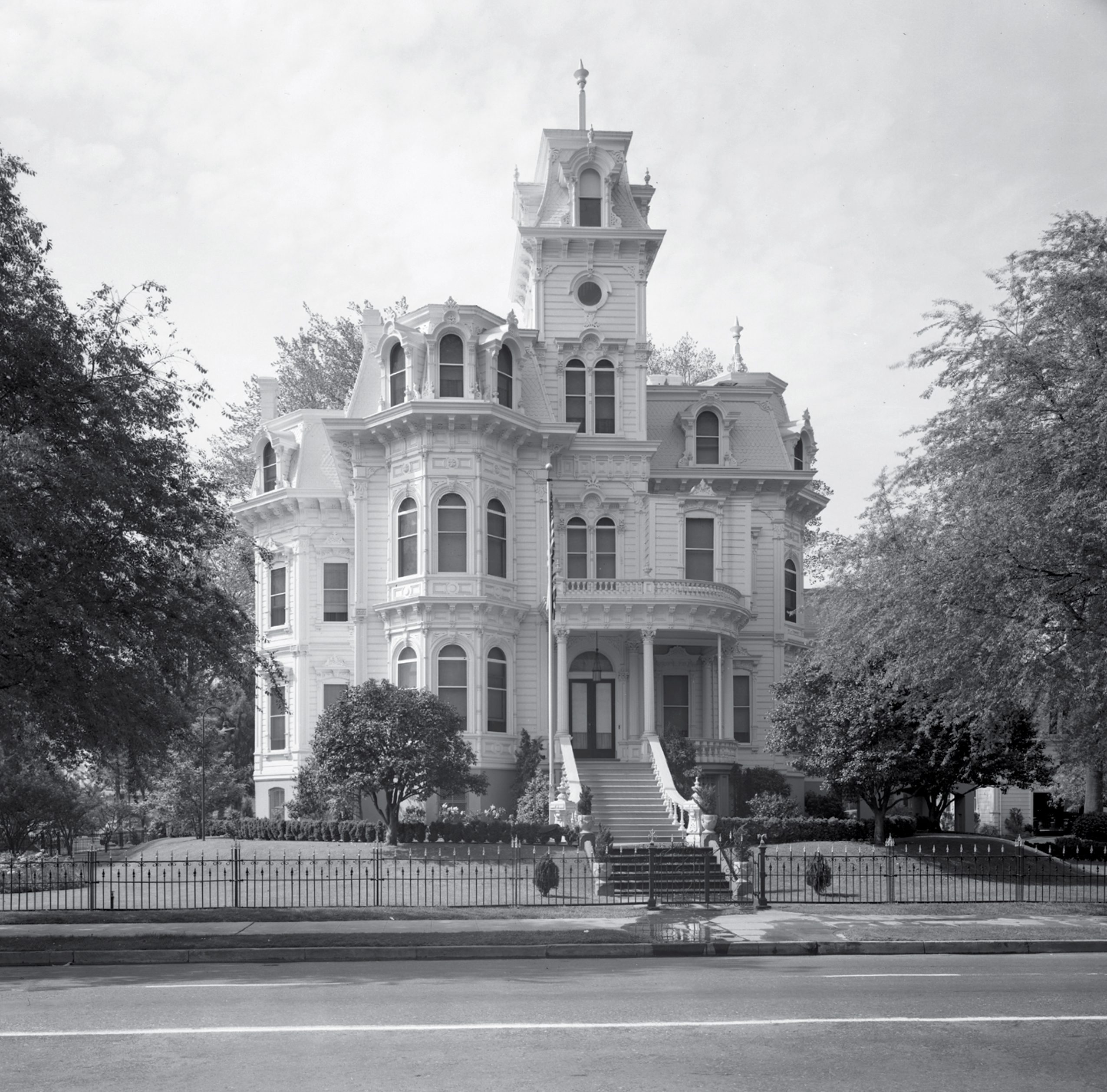
The first "neat" house, located in downtown Sacramento, served as our official Governor's Mansion from 1903 to 1967, and was home to 13 of our state's first families. Today it is a State Historic Park. The second "neat" house is located in the Sierra foothills near the little community of Springville. This small wooden cabin, originally built at the turn of the century by miners, was the home of eccentric hermit, Irvy Elster.
#708 "DRY LAKE BED"
Huell visits a dry lake bed in the Mojave desert that is so hard and so gigantic that it is the site of Edwards Air Force Base and a landing strip for the Space Shuttle.
#709 "CAMELS AND BISON"
Huell goes in search of two animals found in our state today which aren't supposed to be here. First, he travels to Catalina Island in search of historic buffalo. Next, Huell travels to Ft. Tejon State Historic Park between Bakersfield and Los Angeles, in search of camels used during the 1850s by the U.S. Army in hopes of developing improved transportation across the arid west.
#710 "SAN JUAN BAUTISTA"
Mission San Juan Bautista is the largest of the old Spanish mission churches in our state. It sits on a huge grassy area in northern California–the only remaining Spanish plaza in the state. Founded in 1787, it is still the functioning parish church in the San Juan Valley.
#711 "SANTA ROSA ISLAND"
Twenty-four miles off the coast of Santa Barbara lies the newest addition to Channel Islands National Park–Santa Rosa Island–an island in transition from an old west cattle ranch to a 21st Century park preserve.
#712 "JAPANESE GARDEN"
San Francisco's Japanese Tea Garden was built as part of the Japanese Village from the California Midwinter International Exposition of 1894, which was held in Golden Gate Park.

CALIFORNIA’S GOLD. 1997 “800" SERIES.
#801 "QUICKSILVER"
New Almaden Mine was the richest mine California has ever known, processing over $700,000,000 in metallic wealth and it wasn't a gold mine, Quicksilver (mercury) was essential in hard rock mining because it was used to separate the gold from the rock it was found in.
#802 "RAILCARS"
Explore two bits of California railroad history: the annual U.S. National Handcar Races at the California State Railroad Museum and trip to the town of McCloud to an outing sponsored by Motorcars Operators west–a group of people who restore "speeders" used by railroad workers for maintenance and track inspection.
#803 "ROCKS IN THE WATER"
Visit three examples of Califomia rocks in the water. First, Huell travels to Fannette Island, Lake Tahoe's only island. Next, it's off to Humboldt Bay to see the huge concrete shapes resembling toy jacks, that make up its jetty. Finally we'll visit the Mojave Desert–miles from our current
waterways -to see some rocks that were once under water.
#804 "MOUNT SAN JACINTO"
The San Jacinto Mountains is the site of two of the greatest engineering accomplishments ever
attempted. First Huell visits the Palm Springs Aerial Tramway, once called "the 8th wonder of the world" and designated an historic civil engineering landmark. Huell continues by traveling underground, through a 13-mile tunnel dug through the mountains during the 1930s as part of the Colorado River Aqueduct which brought water to Southern California.
#805 "WOODEN BOATS
Travel to Lake Tahoe to the 24th annual Concours d'Elegance which is dedicated to the preservation and celebration of the wooden boats that have graced Lake Tahoe since the 1920s.
#806 "SLAB CITY"
Huell visits with artist and desert character Leonard Knight and his "Salvation Mountain," a huge multicolored mosaic of scripture, flowers and trees sculpted into the side of a mountain. Next Huell visits a town where everyone lives rent free, there are no landlords, no official rules and there are no houses. "Slab City" sits on the sight of an abandoned Marine Base and is an unofficial RV park.
# 807 "PARADISE"
On April 12, 1859, Chauncy Wright and his fellow miners uncovered a 54 pound gold nugget! The town of Paradise, just down the road from Dogtown in Butte County, celebrates this discovery with their annual Gold Nugget Days Celebration.
#808 "MULE DAYS"
Mules have been a part of California for hundreds of years, helping to build our canals, highways and railroads, hauling our freight, our silver bullion and, of course, playing a major role during the gold rush era. Join Huell at Bishop's Mule Days Celebration.
#809 "WIND"
During this windy adventure Huell travels to Warner Bros. Studios to look at movie wind machines. Then it's on to the California Institute of Technology to see the GALCIT Ten-foot Wind Tunnel which has been operating since 1930. The last stop is Point Reyes National Seashore.
#810 "BITS AND PIECES"
During this adventure Huell visits an ostrich farm in Buellton on the central coast, walks through a huge field of flowering marigolds alongside a rural road near Ventura, and tours an historic two-story outhouse in the town of San Juan Bautista.
#811 "VANDENBERG"
Vandenberg AFB is not only the U.S. Air Force's third largest installation, but an important part of our state's and nation's space history. Huell takes a tour that includes stops at the site of the first satellite launch from California, an early Thor missile facility, several Atlas missile sites, and an underground Titan missile site.
#812 "SNOW AND ICE"
On this particular adventure Huell meets up with historian Tom Macauley who takes him to a frozen lake in the Sierra and actually demonstrates how ice was harvested years ago.

CALIFORNIA’S GOLD. 1999 “900" SERIES.
# 901 "SAN MIGUEL ISLAND"
The first European explorer of the California coast, Juan Rodriguez Cabrillo, landed on this island in 1542. To commemorate this event, a group of history buffs recreate the landing. Complete with authentic costumes, and wooden boats, this re-enactment really does take you back in time.
#902 "COLOMA "
Coloma was a somewhat sleepy little town in the Sierra foothills during the 1840s, but on the morning of January 24, 1848, all that was to change as James Marshall leaned over and picked up a piece of gold. His discovery started the California Gold Rush which led to statehood within two years, and changed the face of California and the nation forever.
#903 "BLUE ANGELS"
They're one of the most famous air squadrons in the world -we're talking about the Blue Angels who, since 1967, have spent the winter at Naval Air facility, El Centro, training pilots and new crew members.
#904 "GUADALUPE"
Halfway between San Francisco and Los Angeles just a few miles off the 101 freeway, the little town of Guadalupe sits right in the middle of one of the richest agricultural areas in our state. Huell discusses the rich cultural heritage of the area as he talks with descendants of Filipino families who have been living and working in the Santa Maria Valley for generations.
#905 "DELTA QUEEN"
For 50 years, one of the most popular ways to travel up and down the mighty Mississippi has been aboard the authentic paddle wheel steamboat, the Delta Queen. But true river boat buffs will tell you that the Delta Queen is a California boat, built in Stockton in the mid-1920s for service on the Sacramento River, where she spent the first 20 years of her life as a night-boat taking passengers back and forth from Sacramento to San Francisco.
#906 "CHINA CLIPPER"
The luxurious Pan American "Clipper" planes of the 1930s took cargo, mail and passengers around the world in what was for its time, considered a daring and pioneering feat. From the original Terminal building on Treasure Island Huell climbs aboard one of these historic boat-planes with two former crew members for a short, exciting flight around the Bay area.
#907 "SAN LUIS OBISPO CHINATOWN"
They worked on ranches, and farms, built railroads, ran small shops and raised families -then gradually over the years they disappeared. Now, thanks to historians, archeologists and members of the Chinese community, the history and accomplishments of these early Chinese pioneers are being uncovered.
#908 "SEE'S CANDIES"
In this calorie-laden episode Huell gets a first hand taste of the See's Candies story, which started back in 1921 and quickly became one of California's biggest and "sweetest" success stories.
# 909 "BIG THINGS IN THE DESERT"
First Huell travels to Palm Springs and visits one of six major wind farms in the world -over 4,000 giant windmills are here. Next he visits the little town of Boron. Last, Huell travels to the remote Goldstone area of the Mojave Desert to visit The Deep Space Network.
#910 "CITRUS GOLD"
Join Huell as he explores the history and lore of orange crate labels with Gordon McCleland who's not only written a book on the subject, but has a collection containing literally thousands of the colorful labels, along with orange postcards and other ephemera. Then Huell travels to UC Riverside to visit the Citrus Variety Collection which has approximately 1,700 trees and over 800 different varieties of citrus from all over the world.
#911 "ARROWHEAD SPRINGS"
Over the years it has been the subject of a host of Indian Legends. In fact, no other natural landmark in those mountains has been regarded with such awe and wonder. We're referring to the "Arrowhead" a near-perfect natural 7 _ acre arrowhead-shaped landmark clearly visible on the side of the San Bernardino mountains for hundreds, possibly thousands, of years.
#912 "SHASTA DAM"
When most people think of Shasta Lake, they imagine themselves on a houseboat enjoying California's largest man-made reservoir. With 365 miles of shoreline it is a boaters paradise. What most people don't think about is the massive structure that is responsible for holding back the water that created Shasta Lake. We're talking about Shasta Dam.

HUELL HOWSER'S CALIFORNIA MISSIONS
In this very special ten-part series, simply entitled California Missions, host Huell Howser and cameraman Luis Fuerte set out on a quest to visit all 21 missions that run much of the length of California. These historic settings come in all shapes and sizes, represent different styles of
architecture and are presently in varying stages of restoration. Some are State Historic Parks, while most are still active churches. The series features three missions in each thirty-minute episode, an eighth tape devoted entirely to the Asistencia de San Antonio de Pala Mission, and
two additional tapes featuring mission art and gardens.

The accompanying Teachers Guide was designed for teachers, librarians, curriculum leaders and activity directors and provides invaluable suggestions for lessons, activities and supplementary classroom resources. This guide, for grades kindergarten through twelve, was developed in coordination with the History-Social Science Framework for California Public Schools.

The California Missions series with Teachers Guide sells for $115.00 per
set with a $7.00 shipping charge per set.


CALIFORNIA STATE LIBRARY FOUNDATION ORDER FORM

Name ___________________________________________________
Company Name _________________________________________
Street __________________________________________________
City ________________________________
State _________ Zip ______